
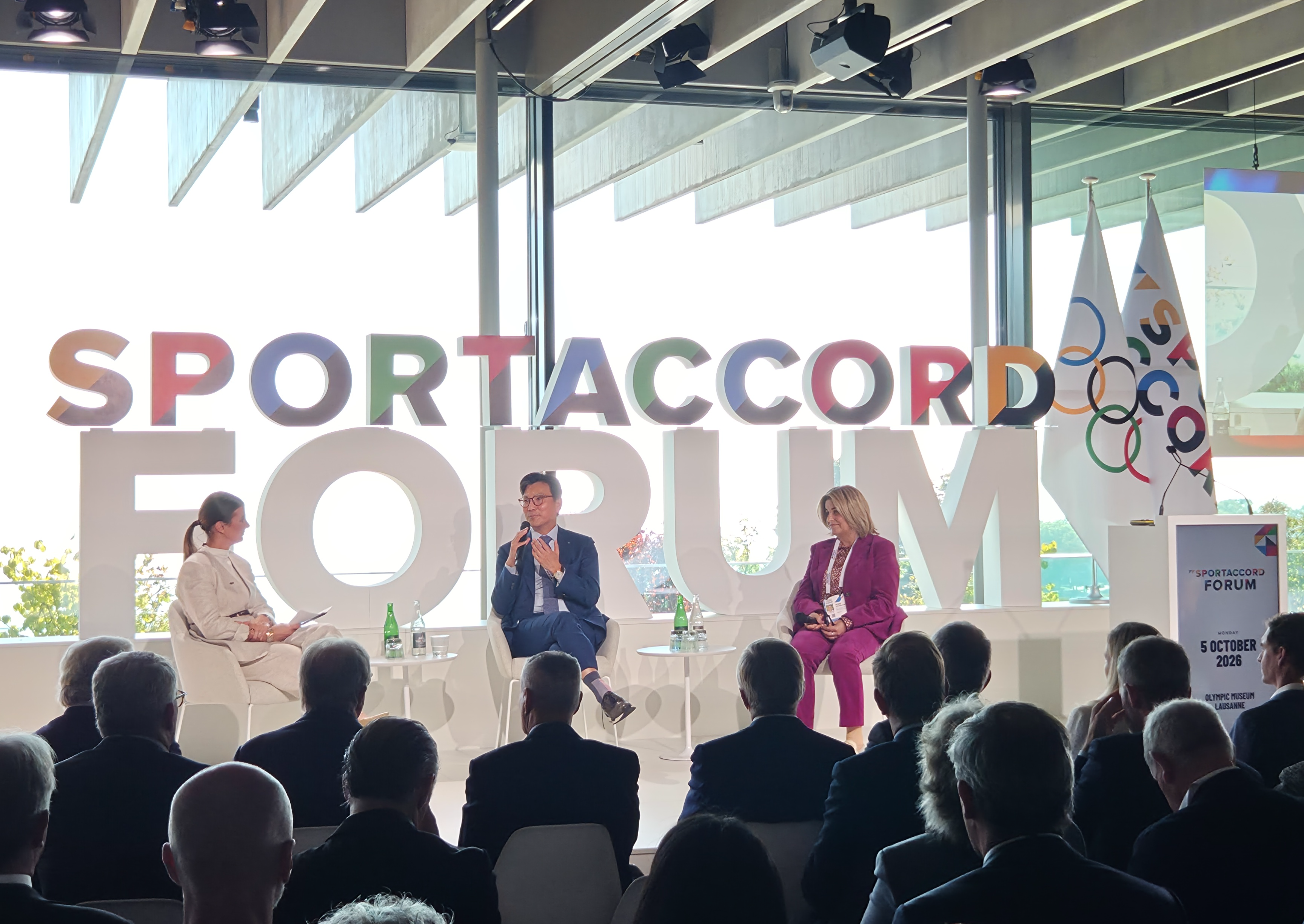
From decentralised Games and sustainability to new audiences and digital engagement, ISU President Jae Youl Kim called for winter sport to evolve with confidence while protecting the athlete experience, sporting integrity and unifying power that make the Olympic Winter Games unique at the SportAccord Forum in Lausanne.
ISU President Jae Youl Kim talking at the “Leading through change: from governance to growth” panel during the SportAccord Forum in Lausanne.
How can winter sport adapt to a changing world while protecting the sporting identity and Olympic experience that make it so unique?
That question was at the heart of the fireside chat “Leading through change: from governance to growth” at the SportAccord Forum in Lausanne, where ISU President Jae Youl Kim joined International Bobsleigh and Skeleton Federation President Heike Größbauer to reflect on the lessons of Milano Cortina 2026 and the future of winter sport.
The discussion explored how winter sport can respond to changing venue requirements, sustainability priorities, evolving audiences, and the wider transformation of the Olympic Movement, while continuing to create memorable experiences for athletes and fans.
For President Kim, the Olympic Winter Games Milano Cortina 2026 provided valuable experience of a decentralized Games model. With 2.6 billion people following the Games worldwide, the event demonstrated the global reach and continued appeal of winter sport. They also provided important lessons about the opportunities and challenges of delivering competitions across different locations.
For future Games, making greater use of existing and established venues can reduce the need for new infrastructure while supporting more sustainable and cost-effective solutions. At the same time, the conditions for athletes to perform and the overall sporting and unique Olympic experience must remain central to decisions about where and how competitions are staged.
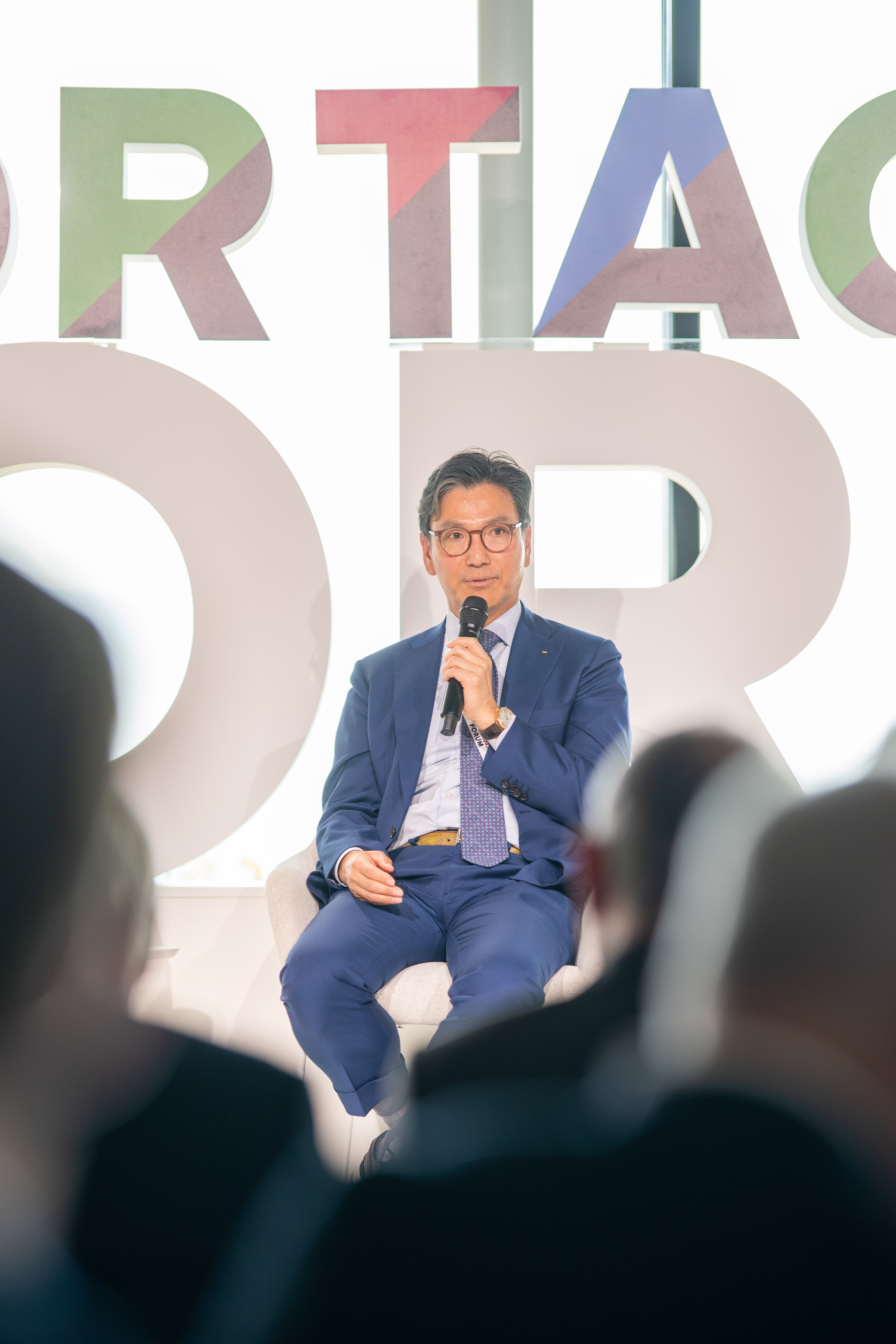
ISU President Jae Youl Kim participating to the “Leading through change: from governance to growth” panel during the SportAccord Forum in Lausanne.
This balance will be particularly relevant as preparations continue for the Olympic Winter Games Alpes 2030, with Speed Skating set to take place in Heerenveen, Netherlands. Heerenveen is a world-renowned Speed Skating venue and a place where the sport has a deep-rooted fan culture. However, the distance from the main Olympic cluster presents a new challenge for creating a connected Games experience.
The ISU is engaging with the IOC and Organising Committee, informed by feedback from its Athletes Committee, to explore ways of strengthening the connection between athletes, the Olympic Village and the wider Games experience. The success of a Games is about more than the competition itself. It is also about creating opportunities for athletes and fans to feel part of something bigger.
Climate change was another key theme of the discussion, highlighting the need for the sports sector as a whole to adapt and strengthen its long-term sustainability. The ISU is working with partners including the International Ice Hockey Federation and the Sustainable Ice Rinks Alliance to share practical knowledge and promote greater energy efficiency, accessibility and long-term viability across ice facilities.
The focus is not only on alternative energy sources, but also on reducing energy consumption through innovation, technology and smarter ways of operating ice facilities. For President Kim, the objective is clear: to help ensure that sport remains accessible and that future generations can continue to discover and enjoy skating.
ISU President Jae Youl Kim giving an interview during the SportAccord Forum in Lausanne.
At the same time, skating is entering the post-Olympic season with significant momentum – especially with an unprecedented opportunity to connect with new and younger audiences. The ISU’s ShowTime campaign generated 402 million video views during Milano Cortina 2026, compared with 11 million during Beijing 2022. Strong engagement has continued into the 2026/27 season, demonstrating the potential to turn Olympic exposure into year-round interest in skating.
“The Olympic Winter Games remains the pinnacle,” President Kim said. “It remains the ultimate shop window for new fans of our sport.”
For President Kim, maintaining that momentum will require collective action across the winter sports community. The challenges around venues, climate, costs and changing audiences cannot be addressed by individual federations alone, but require closer collaboration between International Federations, the IOC, host cities and other stakeholders.
“Sport is unique because it has a unifying power,” President Kim said. “We want to further reinforce the power of sports, especially in today’s very divided world. The Olympic Games bring hope and inspire people, especially young people.”
The message from Lausanne was ultimately one of evolution rather than preservation: winter sport has strong foundations, but its future will depend on the willingness to adapt while protecting what makes it special.
“Our job as leaders is not to preserve a snapshot of winter sport from the past,” President Kim said. “It is to preserve what makes our sports special while having the courage to modernize everything around them that needs to change.”